What Counts as a Confined Space?
Any enclosed (or largely enclosed) place where there is a reasonably foreseeable risk of fire, explosion, loss of consciousness, asphyxiation or drowning counts as a 'confined space' for health and safety purposes. Note that a space doesn't necessarily have to be small, difficult to enter or completely enclosed to count as 'confined'.
The Health and Safety Executive (HSE) uses the above definition when explaining which workplaces are covered by confined space safety rules.
What are some examples of confined spaces?
People often picture a cramped tank or narrow sewer when they hear the words 'confined space', but as noted above, size is not the only determining factor. Some confined spaces are relatively large: the HSE's guidance specifically mentions a grain storage silo as an example of a confined space that may have a capacity of hundreds of cubic metres.
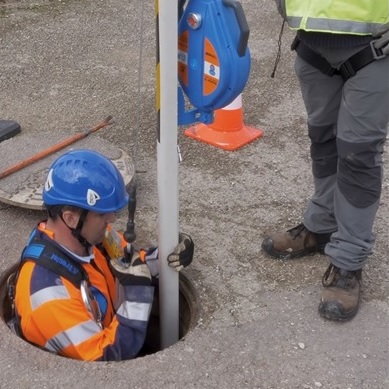
Other examples include manholes, pits, tunnels, shafts, vats and storage bins.
What makes a confined space dangerous?
The 'specified risks' that define a confined space are as follows:
- Fire or explosion
- Loss of consciousness
- Asphyxiation
- Drowning
These risks may arise because of harmful fumes, low oxygen levels, flooding, or materials such as dust or grain that could engulf somebody. Crucially, conditions can change: a space that was safe to enter previously should not automatically be assumed safe now.
What precautions are required when working in a confined space?
Under The Confined Spaces Regulations 1997, entry should be avoided where reasonably practicable. If somebody does need to enter a confined space, the work must be properly risk-assessed and carried out using a safe system of work. Adequate emergency arrangements must also be in place before the work commences.
The necessary precautions will depend on what hazards are present. For example, you may need to:
- Ventilate the area
- Test the atmosphere for hazardous gases
- Provide breathing apparatus
- Come up with a rescue plan to get workers out quickly if something goes wrong
In some cases, a rescue harness and tripod may be appropriate when working in a confined space, but safety equipment should always be selected according to the specific risks identified.