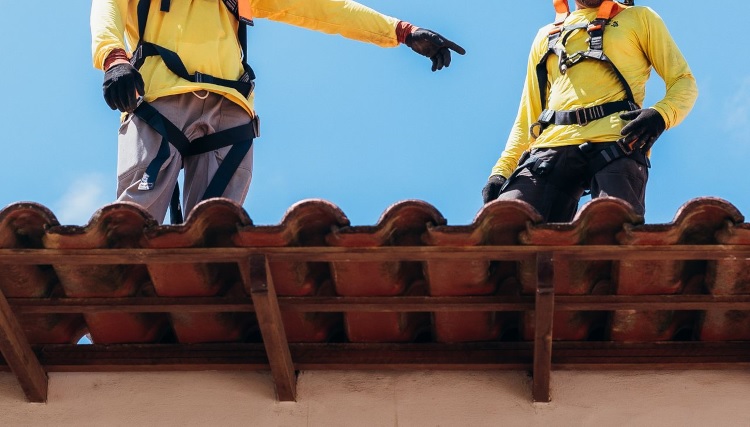
Employers (and others in control of work at height) are responsible for ensuring that any safety equipment is periodically checked by a competent person.
Under the Work at Height Regulations 2005, the main responsibility for checking work-at-height equipment rests with the people in control of the work (e.g. employers, contractors or facilities managers). HSE guidance states that these duty holders must ensure that the work is properly planned and then carried out by capable individuals using suitable equipment.
That said, employees do have some responsibilities of their own while working at height. They must take reasonable care of themselves and others, co-operate with their employer and report any safety hazards they identify.
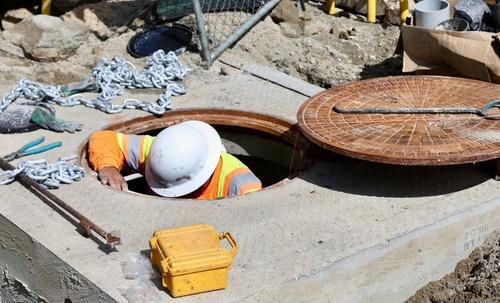
Can you work alone in a confined space? Generally speaking, no. Confined space work can involve serious hazards that make lone working unsafe, and HSE guidelines specifically mention confined space operations as an example of the kind of high-risk work that tends to require the presence of at least one other person.
Confined spaces can expose workers to hazards such as fire, flooding and harmful gases. Because of this, workers should refrain from entering confined spaces at all where possible – and if confined space work is unavoidable, a thorough risk assessment must be carried out beforehand.
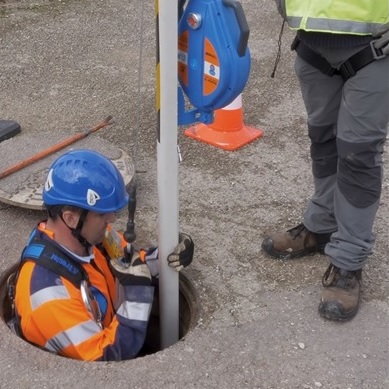
Any enclosed (or largely enclosed) place where there is a reasonably foreseeable risk of fire, explosion, loss of consciousness, asphyxiation or drowning counts as a 'confined space' for health and safety purposes. Note that a space doesn't necessarily have to be small, difficult to enter or completely enclosed to count as 'confined'.
The Health and Safety Executive (HSE) uses the above definition when explaining which workplaces are covered by confined space safety rules.
A fragile surface when working at height can be every bit as dangerous as an open edge. If the surface gives way, a worker may fall through it and suffer life-changing or even fatal injuries.

All roofs should therefore be treated as fragile until a competent person has confirmed otherwise.
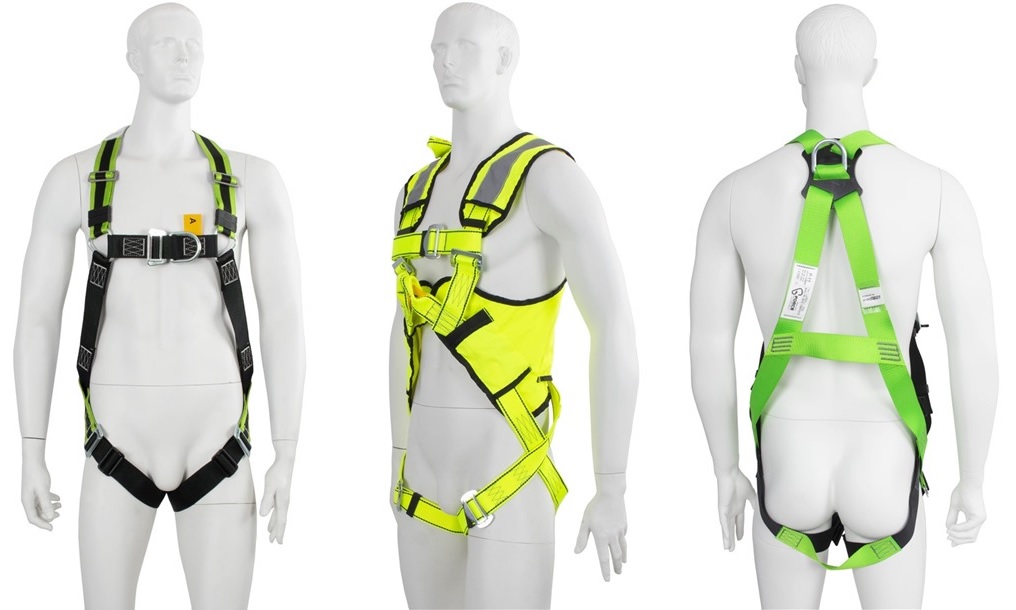
Because safety harnesses come in different sizes, it's important to measure yourself and make sure you get a harness whose dimensions match your body.
Wearing a harness that's the wrong size for you can cause discomfort and restrict your movement, making it harder to get the job done – and in the event of a fall, the forces may not be distributed evenly across your body, increasing the risk of fall arrest injuries.