



Safety Harness Direct practical guide
The Complete Guide to Working at Height
Working at height is part of everyday life in construction, maintenance, warehousing, utilities, telecoms, facilities management and many other industries. It is also an activity that demands careful planning. A person does not need to be working on a tower or high-rise building to suffer a serious injury: falling from height can include a fall from a ladder, a loading bay, a fragile roof, a platform or even into an opening below ground level.
This guide explains the UK working at height definition, the main legal duties, how to assess risk, when fall restraint or fall arrest may be appropriate, how to select personal protective equipment, and why every system must be supported by competent supervision and a workable rescue plan.
What is working at height?
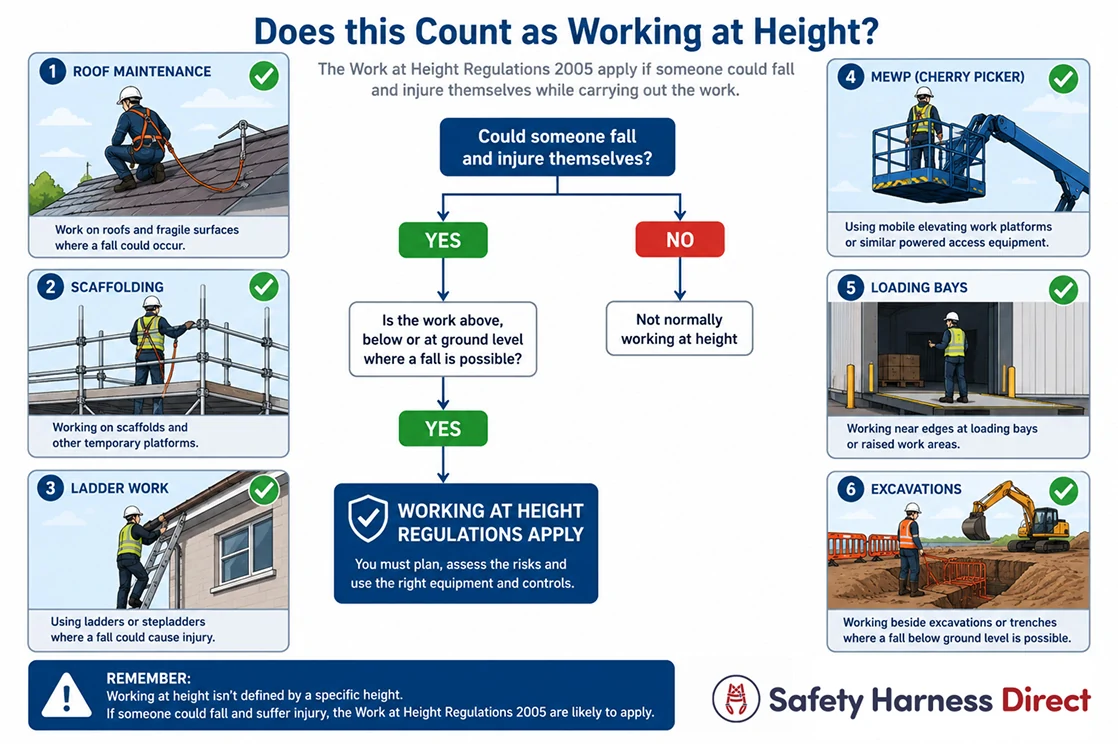
In practical terms, work at height is work carried out in any place where a person could fall a distance capable of causing personal injury if suitable precautions were not in place. The important point is that there is no universal minimum height below which the rules automatically cease to apply. The risk and potential consequence of the fall matter more than an arbitrary measurement.
The working at height definition covers more situations than many people initially expect. It can include working on roofs, ladders, scaffolds, mobile towers, racking, platforms, plant, vehicles and mobile elevating work platforms. It can also include work beside an unprotected edge or fragile surface, and work near a hole, pit or excavation where a person could fall below ground level.
Common examples
- Carrying out repairs from a ladder or stepladder.
- Installing, inspecting or maintaining roof-mounted equipment.
- Working on scaffolding, towers or temporary platforms.
- Using a boom lift, cherry picker or other MEWP.
- Accessing elevated machinery, racking or mezzanine levels.
- Working near skylights, roof lights or other fragile surfaces.
- Working beside an opening, shaft, trench or excavation.
- Loading or unloading close to an unprotected edge.
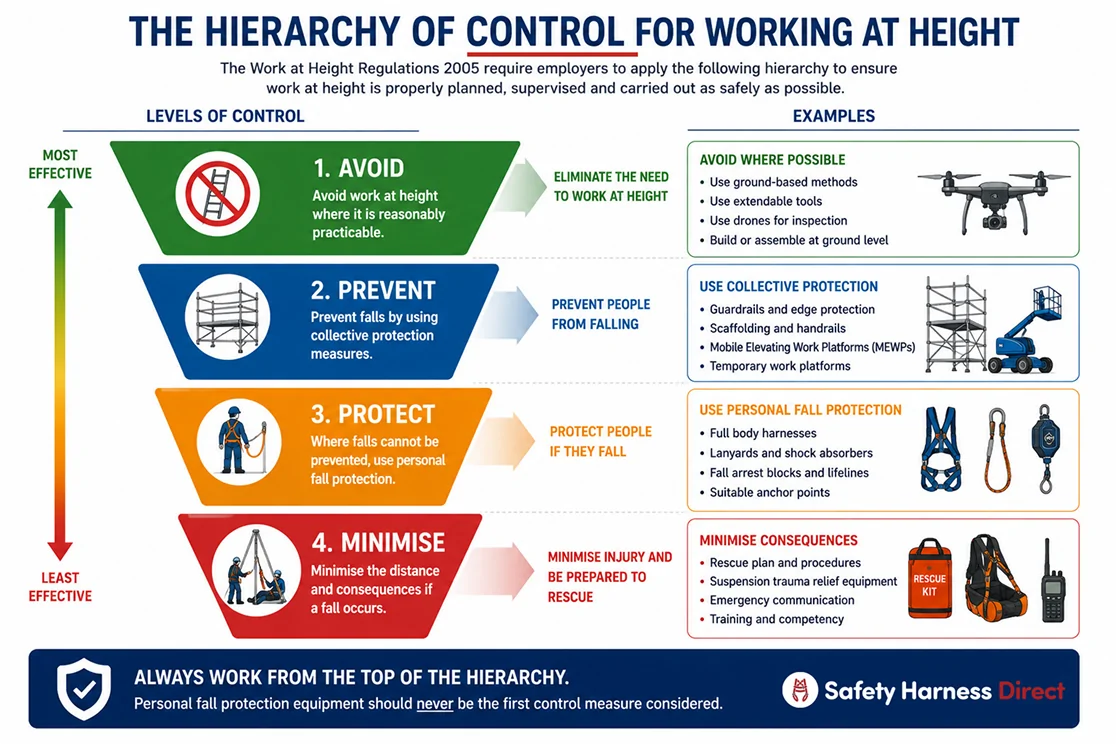
The first question should not be “Which harness do we need?” but “Can the work be completed without exposing anyone to the fall hazard?” Extending tools, lowering equipment to ground level, pre-assembling components or changing the method of work may eliminate the need to work at height entirely. Where the work cannot be avoided, collective protection such as guardrails, scaffolding or a suitable working platform should normally be considered before relying on personal protection.
UK regulations
The central legislation is the Work at Height Regulations 2005. Its purpose is to prevent death and injury caused by falls from height. The Regulations apply to employers and to people who control work at height, which may include facilities managers, building owners and contractors.
The legal framework is based on a clear hierarchy. Dutyholders should avoid work at height where reasonably practicable. Where it cannot be avoided, they should prevent falls by using a safe place of work or suitable work equipment. Where a remaining risk of a fall cannot be eliminated, they must minimise the distance and consequences of that fall.
The hierarchy in plain English
- Avoid: Carry out the work from ground level or use a method that removes the need to climb or access an edge.
- Prevent: Use existing safe access, guardrails, scaffolding, MEWPs or work restraint to stop a fall from occurring.
- Minimise: Where a fall remains possible, use appropriate equipment and methods to reduce the distance and consequences, supported by rescue arrangements.
Other legislation may also be relevant. The Management of Health and Safety at Work Regulations require suitable and sufficient risk assessment. PUWER addresses the suitability, maintenance and use of work equipment. LOLER may apply to lifting equipment and accessories, depending on the equipment and how it is used. PPE legislation places duties around the selection, compatibility, provision and use of personal protective equipment.
Compliance is therefore not achieved by issuing a harness in isolation. The method of work, competence, supervision, inspection, equipment compatibility and emergency arrangements all need to form part of one coherent system.
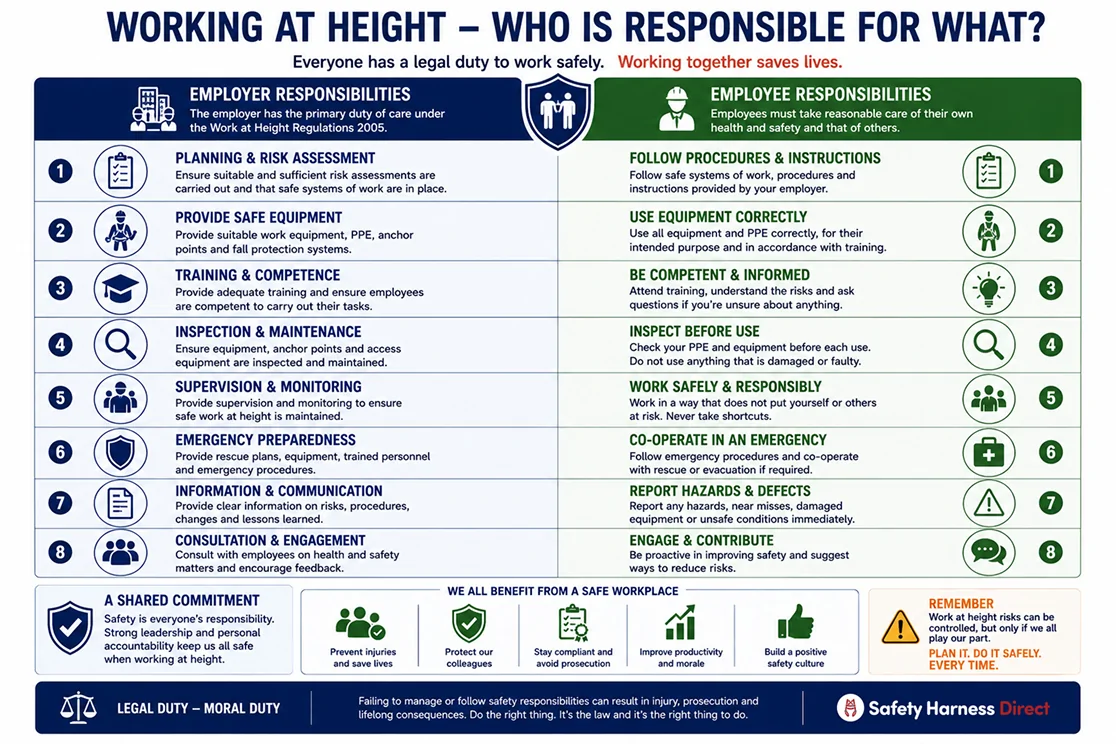
Employer responsibilities
Employers and others who control work at height must ensure that it is properly planned, appropriately supervised and carried out as safely as is reasonably practicable by competent people. Planning must cover more than the normal sequence of work. It should account for foreseeable emergencies, changing site conditions and the possibility that equipment or access arrangements may not perform as expected.
Competence should match the complexity and risk of the task. A worker using a low-level access platform for a routine activity may require a different level of knowledge and supervision from a team installing a temporary lifeline or using a fall arrest system above an exposed edge. Competence can include training, practical experience, familiarity with the equipment and the ability to recognise when conditions have changed.
| Employer or dutyholder | Worker |
|---|---|
| Plan the task and select an appropriate safe system of work. | Follow training, instructions and the agreed method of work. |
| Provide suitable equipment and ensure components are compatible. | Use equipment correctly and only for its intended purpose. |
| Provide suitable information, instruction, training and supervision. | Report defects, damage, hazards and changes in site conditions. |
| Arrange inspections, examinations, maintenance and record keeping. | Complete required pre-use checks and do not use suspect equipment. |
| Prepare for emergencies and provide a practicable rescue plan. | Co-operate with emergency procedures and do not improvise unsafe rescues. |
Employers should also consider who could be affected beyond the person at height. Tools, materials and equipment may fall onto colleagues or members of the public. Exclusion zones, edge protection, secure storage and tethering may therefore be necessary. Weather, lighting, lone working, fatigue, access and communication can all affect whether the original plan remains safe.
Risk assessments
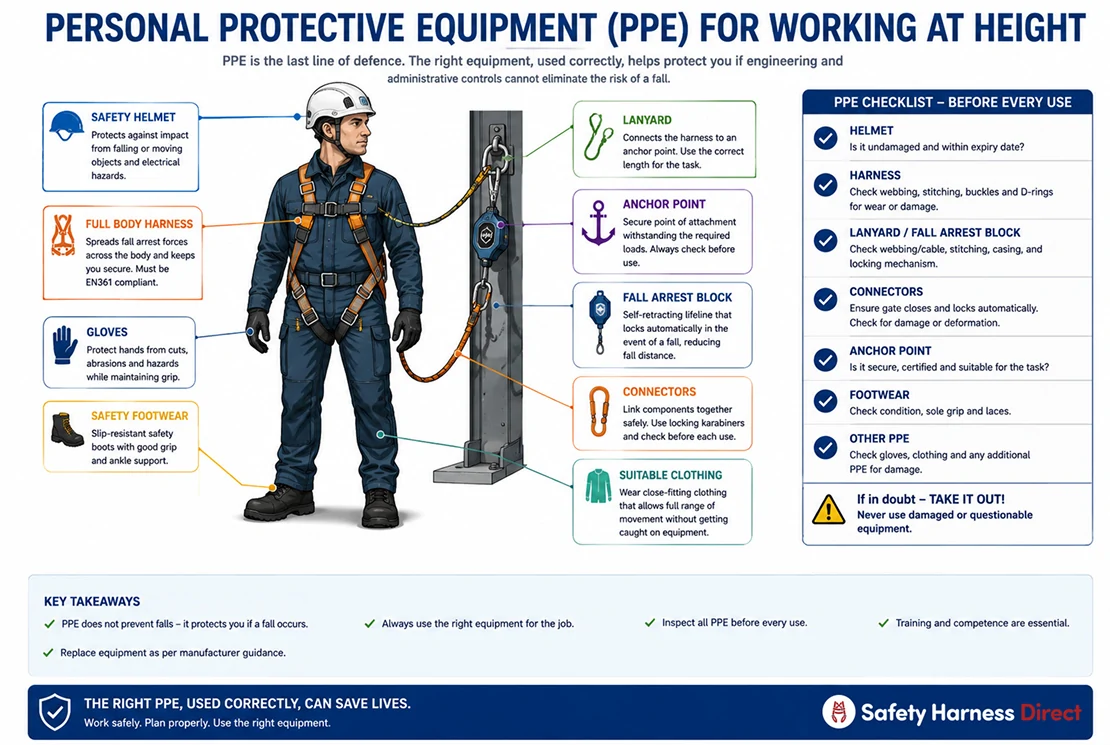
A working at height risk assessment should identify the hazards, who could be harmed, the existing controls and any further action required. It should be specific to the task and location rather than a generic form completed simply to satisfy a process. The assessment should influence the method of work, equipment selection, staffing, supervision and rescue arrangements.
Factors to assess
- Task: What must be done, for how long, and how much movement or force is involved?
- Access: How will workers reach and leave the position safely, including during an emergency?
- Fall distance: Could a person strike the ground, structure, platform or equipment below?
- Edges and surfaces: Are there unprotected edges, openings, fragile materials, roof lights or uneven surfaces?
- Anchor provision: Is there a suitable anchorage in the correct position, and has its suitability been established?
- Equipment compatibility: Are harnesses, connectors, lanyards, blocks and anchors designed to work together?
- Environment: Consider wind, rain, ice, heat, contamination, poor visibility and electrical hazards.
- People: Consider competence, fitness, communication, supervision and the needs of individual users.
- Falling objects: Could tools or materials injure people below?
- Rescue: Can a casualty be reached and recovered promptly without exposing rescuers to unacceptable risk?
The assessment must also consider the suitability of the proposed work equipment. A ladder may be appropriate for low-risk, short-duration work where it can be used safely, but it should not be the automatic choice for every task. A scaffold, tower or MEWP may offer a more stable platform and collective protection. Personal fall protection should be selected only after the higher-order controls have been considered.
Review the assessment whenever circumstances change: for example, if the anchor position moves, the task takes longer than expected, the weather deteriorates, new contractors arrive, a different MEWP is supplied or the work area becomes congested. A document that no longer reflects the real task is not an effective control.

Fall arrest vs restraint
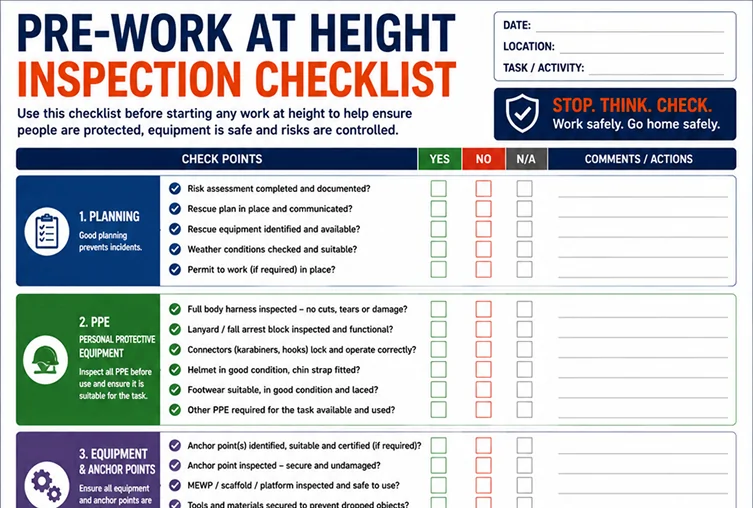
Fall restraint and fall arrest are not interchangeable terms. Both can involve a full-body harness, a lanyard or connecting device and an anchor, but they control the risk in different ways.
Fall restraint is designed to prevent the user from reaching a position where a fall can occur. The connecting equipment is selected and adjusted to limit travel. Because the worker should not be able to cross the exposed edge, restraint is a fall-prevention measure.
Fall arrest allows the worker to access an area where a fall remains possible, then arrests the fall after it has begun. The system must safely manage the forces involved, provide adequate clearance and limit the risk of collision with the structure or level below. A fall arrest system also creates an immediate rescue requirement because the worker may be left suspended.
| Consideration | Fall restraint | Fall arrest |
|---|---|---|
| Primary aim | Prevent access to the fall hazard. | Stop a fall after it begins. |
| Positioning | Lanyard length and anchor location restrict travel. | System allows access but must control fall distance and force. |
| Clearance | Normally less critical because no fall should occur. | Critical: total fall clearance must be calculated. |
| Energy absorption | Not normally used to arrest a fall. | May require an energy absorber or appropriate self-retracting device. |
| Rescue | A rescue plan is still required for foreseeable emergencies. | A prompt, specific suspended-casualty rescue plan is essential. |
Where reasonably practicable, preventing a fall is preferable to managing one after it occurs. However, even restraint systems require careful design. If the lanyard is too long, the anchor is poorly positioned or the user can connect to an unsuitable point, a supposed restraint system may unintentionally become fall arrest equipment without the necessary energy management or clearance.
For fall arrest, the complete system must be assessed. Relevant factors include free-fall distance, lanyard deployment, energy absorber extension, harness stretch, the height and weight of the user, anchor location, swing-fall risk and a safety margin below the worker. Manufacturer instructions should always be followed, and calculations should be undertaken by a competent person.
PPE requirements
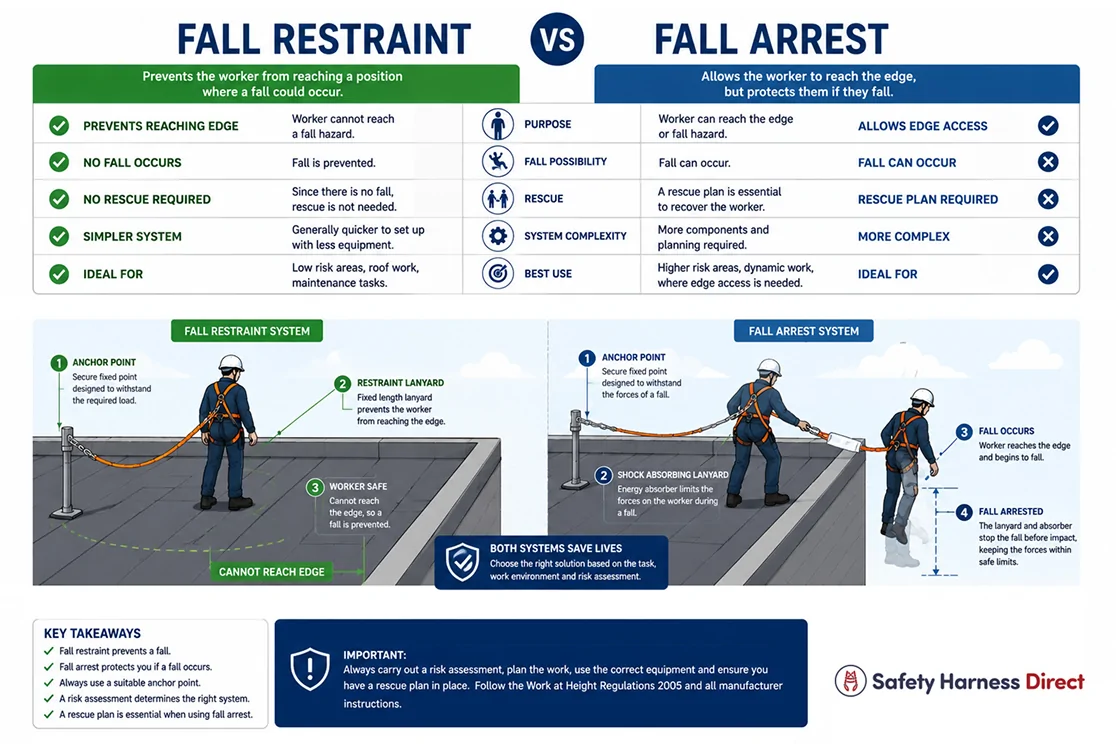
Personal protective equipment is the final layer in a wider control strategy, not a substitute for avoiding the hazard or installing collective protection. The PPE required will depend on the task and risk assessment. Typical equipment may include a safety harness, lanyard or fall arrest block, connectors, a suitable anchorage, safety helmet, footwear, gloves, eye protection and high-visibility clothing.
Components must be suitable for the intended use and compatible with one another. A connector that fits through an anchor opening is not automatically appropriate. Gate loading, side loading, roll-out, sharp edges, incompatible shapes and environmental exposure can all undermine performance. Equipment should be selected as a system, not as unrelated individual products.
Inspection and care
Users should carry out pre-use checks in accordance with their training and the manufacturer's instructions. Look for cuts, abrasion, burns, chemical contamination, damaged stitching, distorted metalwork, corrosion, damaged gates, illegible labels and signs that a shock absorber or fall indicator has deployed. Any item that has arrested a fall, is suspected of being damaged or has an uncertain history should be withdrawn from use and dealt with under the organisation's inspection procedure.
Formal inspections should be completed at intervals determined by the risk assessment, applicable guidance and manufacturer instructions. Records should identify the item, inspection date, findings and action taken. Storage matters too: equipment should be kept clean, dry and protected from sunlight, chemicals, sharp objects and unauthorised modification.
MEWPs
Mobile elevating work platforms can provide a protected and stable working area when they are correctly selected, positioned and operated. Common types include scissor lifts, vertical personnel lifts and boom-type platforms such as cherry pickers. The risks and fall-protection requirements are not identical for every machine, so the assessment must reflect the specific MEWP, task and environment.
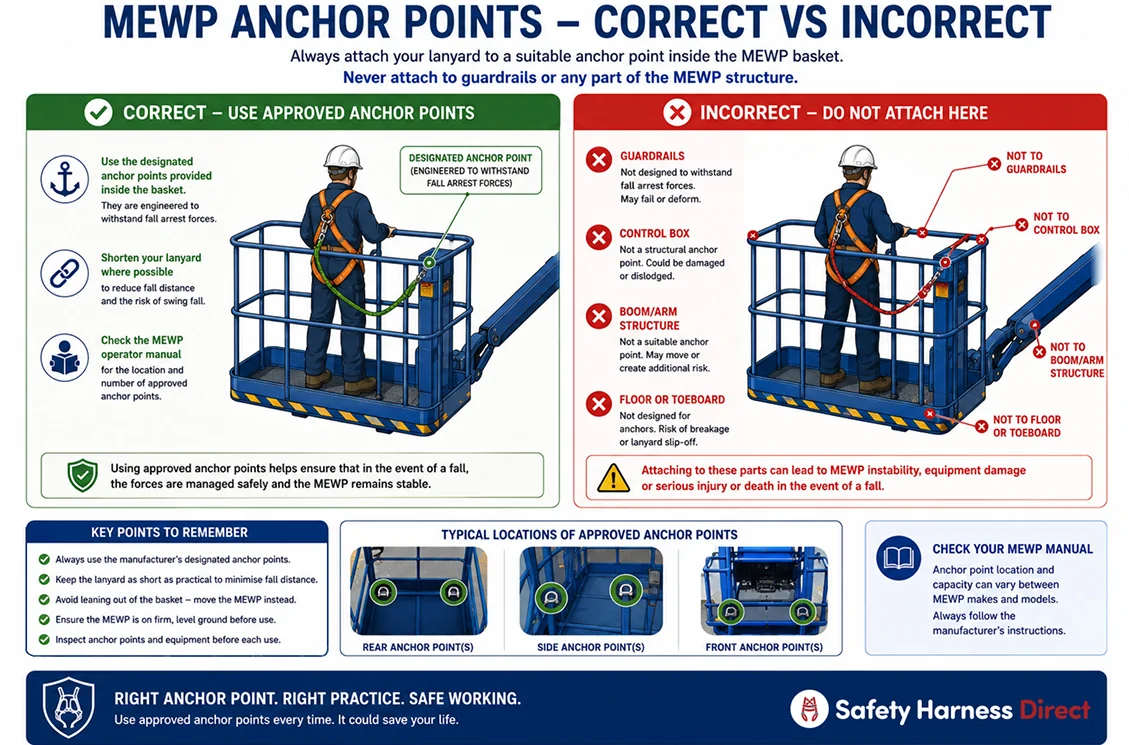
For boom-type MEWPs, current HSE and IPAF guidance strongly supports the use of a full-body harness with a short work-restraint lanyard connected to a suitable manufacturer-provided anchorage within the platform. The intention is to keep the occupant inside the basket and reduce the risk of ejection. The lanyard should be adjusted as short as practicable while allowing the task to be completed safely.
For vertical lifts, including many scissor lifts, personal fall protection is not normally required unless exceptional circumstances or the risk assessment indicate otherwise. Guardrails should remain the primary protection. Occupants should not climb or stand on the rails, use improvised steps, overreach or attach to a point that the manufacturer has not approved.
MEWP planning essentials
- Use trained and authorised operators familiar with the specific machine.
- Assess ground conditions, overhead structures, traffic routes and power lines.
- Confirm safe working load, occupant limits and wind restrictions.
- Use only the designated anchorage points identified by the manufacturer.
- Select a restraint lanyard that keeps the user within the platform.
- Prevent tools and materials from falling onto people below.
- Ensure ground controls and emergency lowering procedures are understood.
A fall arrest lanyard should not be selected for a boom lift simply because it contains an energy absorber. The preferred objective is restraint within the basket. If exceptional circumstances require a different system, it must be supported by a specific assessment, suitable equipment and the manufacturer's instructions.
Harness requirements
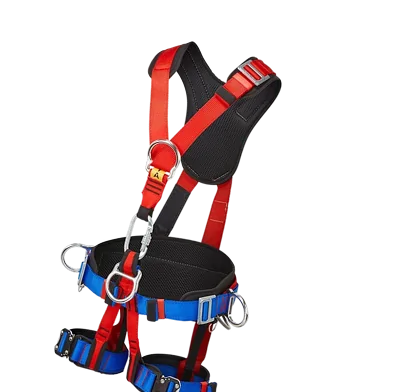
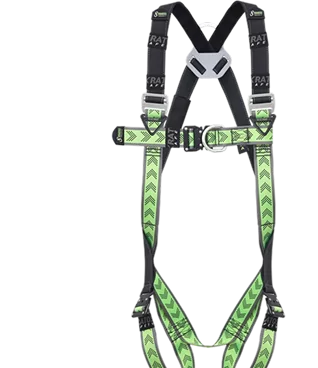
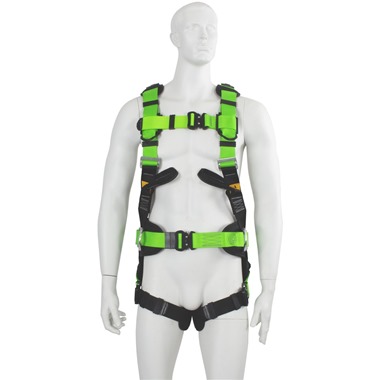
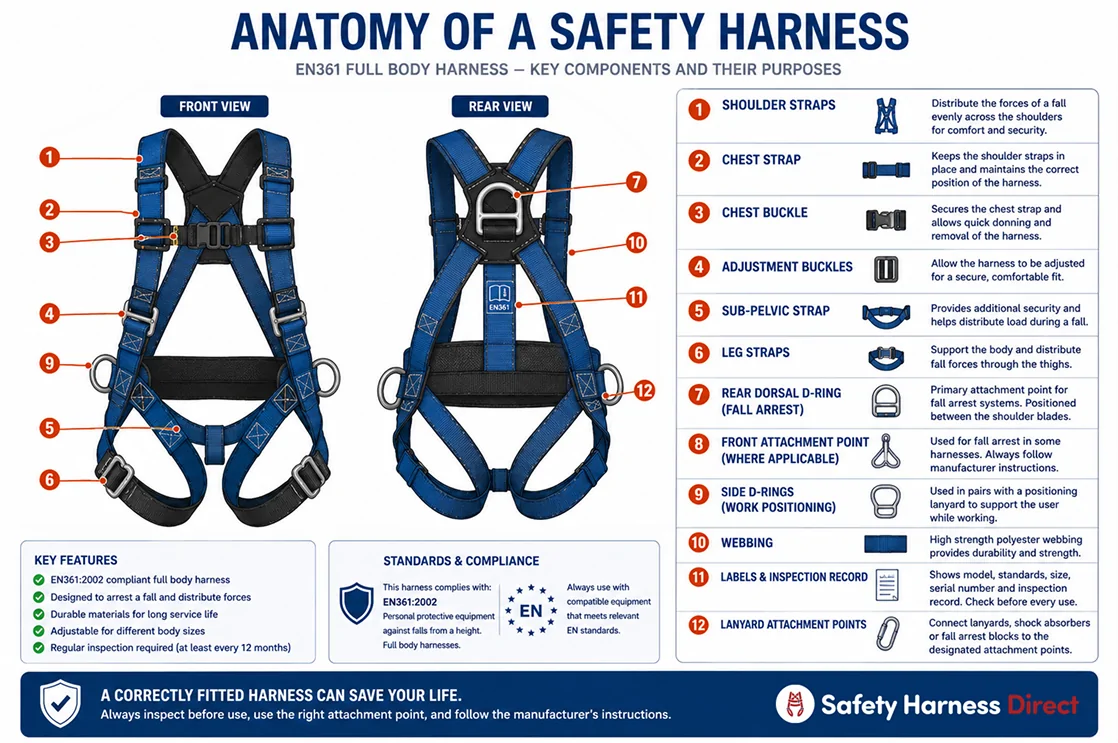
A safety harness should be selected according to the system, task and environment. For fall arrest, a full-body harness conforming to the relevant standard is normally required so that arrest forces are distributed across the body. The number and position of attachment points will depend on whether the user needs fall arrest, work positioning, restraint, rescue, ladder access or another specialist function.
EN 361 is commonly associated with full-body harnesses intended for fall arrest. Other standards may apply to work-positioning belts, sit harnesses, rescue harnesses, lanyards, connectors and retractable devices. A product's conformity does not, by itself, make it suitable for every task. The designated attachment point must match the intended function and the manufacturer's instructions.
Fit and adjustment
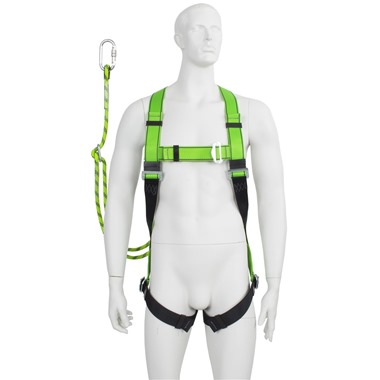
A harness should be the correct size and adjusted to fit the individual. Webbing should lie flat without twists, leg and chest straps should be secure, and buckles should be correctly fastened. The user should be able to move and work without excessive slack, while avoiding adjustment so tight that it restricts circulation or mobility. Loose straps can increase movement during a fall and affect the body's position.
Users should receive practical training in fitting, adjusting, connecting and checking the harness. Sharing harnesses can create fit, hygiene and record-keeping problems, so many employers issue equipment to named individuals. Special considerations may be needed for unusual body shapes, pregnancy, medical conditions, heavy clothing, contaminated environments, welding, electrical work or high-temperature applications.
Choosing by application
- General fall arrest: A suitable full-body harness with the required dorsal or sternal attachment point.
- Work positioning: A harness designed for supported positioning, used with an independent fall-protection system where required.
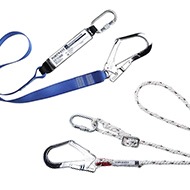
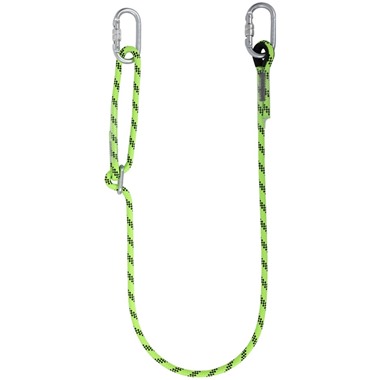
- MEWP restraint: A compatible full-body harness and short adjustable restraint lanyard.
- Roof work: A system selected for the roof type, anchor arrangement, edges, potential pendulum fall and rescue method.
- Rescue or confined space: A harness with appropriate lifting or rescue attachment points, selected as part of the full retrieval system.
Rescue planning
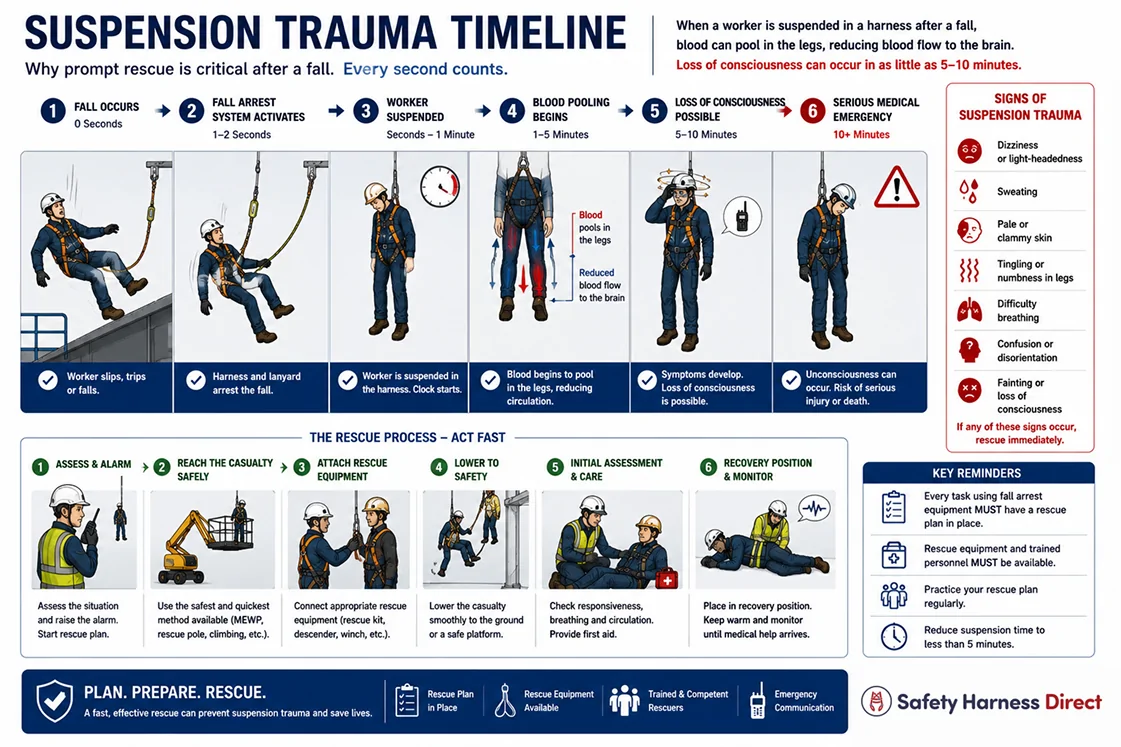
Rescue planning is an integral part of working at height, particularly where personal fall arrest equipment is used. Calling the emergency services is not, on its own, a complete rescue plan. The organisation must consider how a casualty will be reached, stabilised and recovered promptly using available people and equipment without creating additional casualties.
A suspended worker may be injured, unconscious, unable to self-rescue or exposed to the effects of suspension. The response therefore needs to be specific, practised and achievable. The plan should state who raises the alarm, who takes control, which rescue method is used, where equipment is stored, how the area is made safe and how first aid and medical assistance are obtained.
A practical rescue plan should address
- The likely fall and suspension scenarios created by the task.
- The location, height, access restrictions and hazards to rescuers.
- Whether self-rescue, assisted rescue, lowering or raising is appropriate.
- The competence and availability of the rescue team throughout the work.
- The compatibility and reach of rescue equipment.
- Communication, emergency contacts and site access for medical services.
- Post-rescue first aid, casualty handling and preservation of the equipment for investigation.
Rescue drills should reflect realistic conditions. Equipment that works in an open training area may be difficult to operate around steelwork, roof edges, confined spaces or obstructions. Rehearsal can identify missing connectors, inadequate rope length, unsuitable anchor positions, communication failures and tasks that require more than one rescuer.
Trauma relief straps may help a conscious suspended person support their weight while awaiting rescue, but they do not replace a prompt recovery plan. Rescue systems should be selected, inspected and used by competent people in accordance with the manufacturer's instructions.
Frequently asked questions
What legally counts as working at height?
It is work in any place where a person could fall a distance liable to cause personal injury if precautions were absent. This can include falls from an elevated position and falls into openings or excavations below ground level.
Is there a minimum height for the Work at Height Regulations?
No single minimum measurement applies to every task. The potential for personal injury determines whether the risk must be controlled.
Can a ladder be used for working at height?
Yes, where the risk assessment shows that a ladder is suitable for the task, including the duration and level of risk, and it can be used safely by a competent person. More secure access equipment may be necessary for longer, heavier or higher-risk work.
Is a harness always required?
No. The priority is to avoid work at height and then use collective measures to prevent falls. A harness may form part of a personal restraint, positioning or arrest system where justified by the assessment.
What is the difference between fall prevention and fall protection?
Fall prevention stops a person from falling, for example through guardrails or restraint. Fall protection is a broader term that can also include systems designed to minimise the distance or consequences of a fall.
What is fall clearance?
Fall clearance is the unobstructed distance required below a worker for an arrest system to deploy and stop the fall without the person striking the ground, structure or level below.
How often should a harness be inspected?
The user should complete a pre-use check before use. Formal inspection intervals should be set using the risk assessment, current guidance and manufacturer instructions, with inspections recorded by a competent person.
Can equipment be used again after arresting a fall?
It should be withdrawn from service immediately and dealt with in accordance with the manufacturer's instructions and the organisation's inspection procedure. It should not simply be returned to use because no damage is obvious.
Do workers need a harness in a MEWP?
For boom-type platforms, HSE and IPAF guidance strongly recommends a harness with a short restraint lanyard connected to a designated anchor in the basket. Personal fall protection is not normally required in vertical lifts unless exceptional circumstances or the risk assessment indicate otherwise.
Who is responsible for work at height?
Employers and people who control the activity have legal duties to plan, supervise and manage it safely. Workers must co-operate, use equipment correctly and report hazards or defects.
Why is an anchor point important?
The anchor transfers forces from the personal fall-protection system to the supporting structure. It must be suitable for the intended system, correctly positioned and used in accordance with the design and manufacturer instructions.
What should happen after a fall from height?
The rescue plan should be activated immediately. After the casualty is recovered and receives appropriate medical attention, the equipment should be isolated and the incident investigated before work resumes.
Need help selecting working at height equipment?
Every task is different. Safety Harness Direct supplies a broad range of safety harnesses, lanyards, fall arrest blocks, anchor points and MEWP equipment from trusted height-safety manufacturers.
Contact the Safety Harness Direct team for product information and help identifying equipment that matches your planned application. Final system selection, installation and use should be confirmed by a competent person with reference to the risk assessment and manufacturer guidance.