Fall Restraint vs Fall Arrest: Understanding the Difference
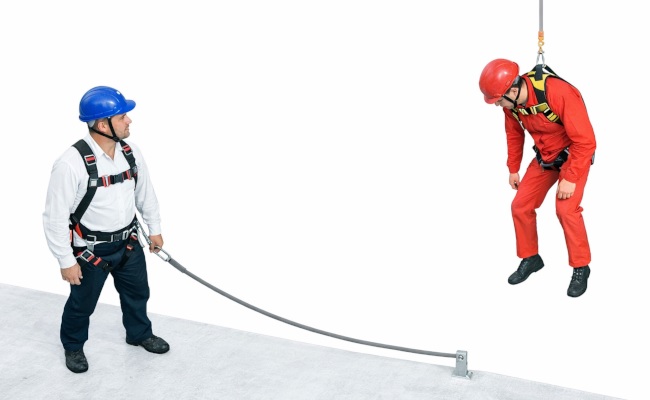
Fall restraint and fall arrest are two different approaches to working at height safely. Fall restraint is all about preventing the worker from reaching a position where a fall could happen, whereas fall arrest focuses on catching the worker mid-fall, stopping them before they hit the ground.
Shop Fall Restraint Equipment Shop Fall Arrest Equipment
As a general rule, fall restraint is preferable to fall arrest. If you can prevent falls from happening in the first place, that's safer than trying to save someone after they fall. However, there are some situations where a fall restraint system wouldn't be practical, in which case fall arrest gear may be a more appropriate choice.
Read on to learn more about fall restraint, fall arrest, and the differences between the two.
At a Glance: The Differences Between Fall Restraint & Fall Arrest
- Fall restraint systems prevent the worker from reaching a fall hazard, while fall arrest systems save a falling worker from hitting the ground (or a lower level).
- Fall restraint equipment limits movement so the user cannot get to an exposed edge, while fall arrest gear allows access to high-risk areas and catches the user if they fall.
- Fall restraint is generally preferred because preventing a fall is better than trying to minimise the consequences of a fall.
- Fall arrest systems need enough clearance below the user to stop a fall safely, while fall restraint systems are designed so that a fall should not happen at all.
- Fall arrest systems usually require more detailed planning because you must consider fall distance, anchor position and rescue arrangements.
What Is Fall Restraint?
Fall restraint is a system that stops a worker from reaching a place where they could fall. For instance, instead of protecting someone after they go over an edge, it keeps them away from the edge altogether.
A typical fall restraint setup includes a harness, a restraint lanyard of the correct length and a suitable anchor point. When correctly selected and adjusted, this system allows the user to work safely without being able to enter a dangerous area.
This is why fall restraint is usually a better choice than fall arrest. If there is no opportunity to fall, the level of risk is lower from the outset.
Here at Safety Harness Direct, we sell reliable fall restraint harnesses, fall restraint lanyards and anchor points for use in fall restraint systems.
What Is Fall Arrest?
Fall arrest is used when a worker cannot be prevented from reaching a fall hazard. In these situations, the system is designed to stop the fall safely before the worker strikes the ground or another lower level.
Unlike fall restraint, fall arrest accepts that a fall may happen. The purpose is to limit the distance and consequences of that fall as much as possible.
A fall arrest system will normally involve a fall arrest harness, a suitable connecting element such as a fall arrest lanyard or fall arrest block, plus a secure anchor point.
Because they permit falls to occur, fall arrest systems demand careful planning. You must consider clearance below the user, swing fall risk, the suitability of the anchor point and how the person will be rescued if they are left suspended after a fall. (Note that leaving someone suspended in mid-air for an extended period of time can result in suspension trauma.)
Why Fall Restraint Should Come First
When deciding between fall restraint and fall arrest, the key principle is this: preventing a fall is better than stopping one after it has begun.
That is why fall restraint should be used wherever the work allows it. If the worker can be kept away from the edge or other hazard, the overall risk is reduced and the system is often simpler to manage.
Fall arrest systems still have an essential role to play, especially where workers need to access exposed areas to do their job properly. But it should generally be treated as the 'last resort' measure that's used when restraint is not reasonably possible.
For anyone selecting equipment for a working at height task, it is worth remembering that not all lanyards or safety harnesses are intended for the same purpose. A system should always be chosen to match the actual risk and method of work.
When Is Fall Restraint Appropriate?
Fall restraint is usually appropriate when the worker can do the task without needing to reach an unprotected edge or fragile surface. For example, if the work area allows movement to be safely limited using the correct lanyard length and anchor position, restraint may be the best option.
This can be particularly useful on flat roofs, as well as for certain maintenance tasks and other situations where the worker needs controlled access but does not need to move into the danger area itself.
In many cases, restraint systems are also easier for users to understand because the goal is straightforward: stay within the safe working zone at all times.
When Is Fall Arrest Appropriate?
Fall arrest is generally used when the worker needs to operate in an area where a fall hazard cannot be avoided by simple restriction of movement. This may apply when working close to an exposed leading edge or in other situations where access requirements make restraint impractical.
However, using fall arrest equipment is not simply a matter of clipping on and carrying on. The system must be compatible, correctly fitted and used with proper planning. If a fall occurs, the worker may be left suspended, so rescue arrangements must be considered in advance.
If you would like to read more about this, our guide on when a fall arrest system is required explains the topic in more detail.
Choosing the Right Equipment for the Job
The right setup depends on the task, the work area and whether the risk can be prevented or merely controlled. Where possible, a restraint-based system is often the better answer. Where that is not possible, a properly-planned fall arrest system may be required.
At Safety Harness Direct, we stock a wide range of height safety equipment for both approaches, including individual harnesses, lanyards, anchor points and practical safety harness kits that bring compatible equipment together in one package.
Shop Fall Protection Equipment
FURTHER READING: Looking to improve your understanding of working safely at height? Our Complete Working at Height Guide covers UK legislation, the hierarchy of control, risk assessments, PPE, harness selection, MEWP safety and rescue planning in one comprehensive resource.