If you are planning an elevated job, you might be asking: what are the risks of working at height, and how can they be safely managed? Working at height is inherently precarious. Whether you are navigating scaffolding, repairing a fragile roof, or hauling equipment up a ladder, you need a safe, compliant method for getting the job done.
Under UK regulations, we always recommend conducting a thorough risk assessment before any elevated work begins. This assessment allows you to identify every potential working at height risk and put the correct safety equipment in place to minimize the chance of an accident.
Read our guide below to understand the most common hazards and how to protect your team.
Common Work at Height Risks
Let's start by looking at the hazards you might face. These dangers must be considered in any scenario, whether on a commercial building site, an industrial warehouse, or a residential property:
- Falling from height: The most severe hazard, often caused by slipping or losing balance near unprotected edges.
- Dropped tools and equipment: Falling materials pose a massive, sometimes fatal, threat to the personnel or public below you.
- Fragile surfaces: Falling through weak structures, such as skylights, asbestos cement roofs, or unstable scaffolding.
- Un-guarded openings: Stepping into unprotected voids, ledges, or elevator shafts.
- Inefficient or faulty safety equipment: Relying on worn lanyards or expired harnesses that fail upon impact.
- Inexperienced staff: Allowing untrained or incompetent team members to operate at height without supervision.
How Can You Manage These Risks?
Before work begins, it's absolutely vital to carry out a risk assessment in accordance with the Work at Height Regulations 2005. You must consider all possible work at height risks—not just the obvious ones—so you aren't caught in a life-threatening situation once the job starts.
The Health and Safety Executive (HSE) recommends managing these hazards using a strict hierarchy of control:
- Avoid Working at Height Always weigh up your options. If a job can be done from the ground (such as assembling structures before lifting them, or using extendable tools), you should avoid working at height altogether.
- Prevent Falls If the job cannot be completed from the ground, you must prevent falls by investing in the right safety equipment, such as guardrails, edge protection, or fall restraint harnesses that stop a worker from reaching a hazard.
- Minimise the Distance and Consequences If the risk of a fall cannot be completely eliminated, you must use fall arrest equipment (like shock-absorbing lanyards or safety nets) to minimize the distance and impact of the fall.
Key Checks for Your Risk Assessment
When auditing your site for a specific working at height risk, always check the following:
- Equipment: Is the gear selected suitable and in good working order? Check for any signs of wear and tear, and replace damaged PPE immediately. Never work with equipment you aren't 100% confident in.
- Surfaces: Inspect the surfaces you'll be standing on. Are they fragile, wobbly, or unstable?
- Falling Objects: Ensure all equipment and materials are secured. We stock a great range of tool lanyards specifically designed to prevent dropped objects.
- Emergency Procedures: You don't want to be making an evacuation plan while suspended in mid-air. Make sure everyone on site understands the rescue and emergency procedures before anyone leaves the ground.
Things to Avoid When Working at Height
Finally, make sure everyone is well-versed in the absolute "don'ts" of height safety:
- Do not overload equipment or platforms with too much weight.
- Do not overreach while on ladders, platforms, or scaffolding.
- Do not rest access solutions on weak or unstable ground.
- Do not let people who are untrained or incompetent work at height.
Now that you know exactly what to look for, let's look at the top-of-the-range equipment we supply to help you work safely.
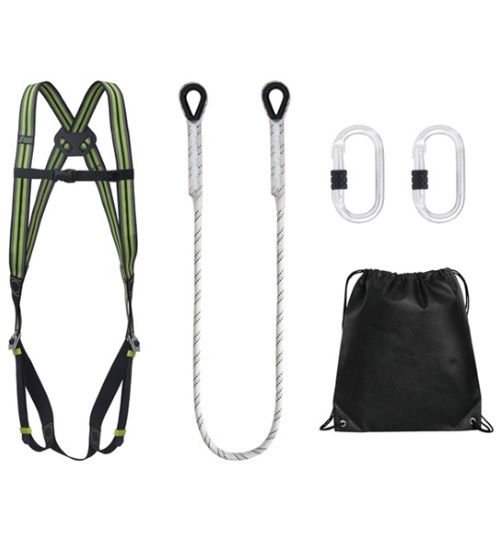
Safety Harness Kits
If you want to purchase a single kit with everything you need to work comfortably and safely, take a look at our safety harness kits. These contain a combination of our most durable harnesses, safety lanyards, and accessories so you can get started ASAP.
Shop Safety Harness Kits >
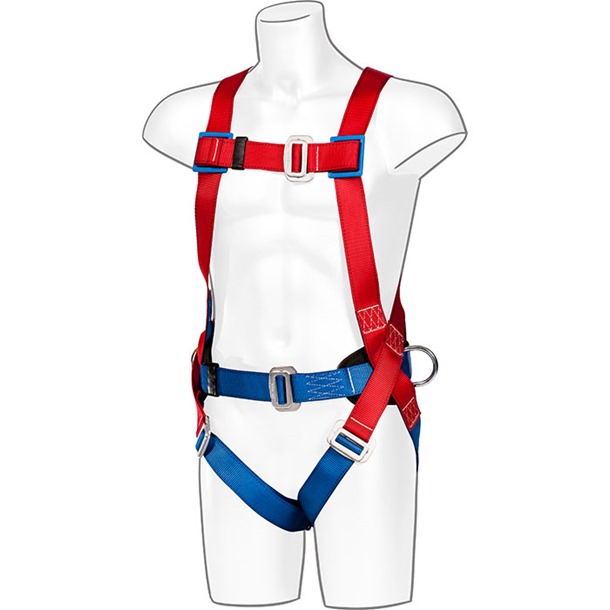
Safety Harnesses
Here at Safety Harness Direct, we specialise in a wide range of PPE. Whether you need a single-point, double-point, or full-body setup, we can supply a harness that will properly support you.
Shop All Safety Harnesses >
While there are a lot of risks to consider when you're working at height, you can work safely and effectively when you have the right equipment to support you. If you have any questions, or if you'd like to speak to our team about your safety equipment needs, feel free to get in touch.