How to Work Safely on a Flat Roof
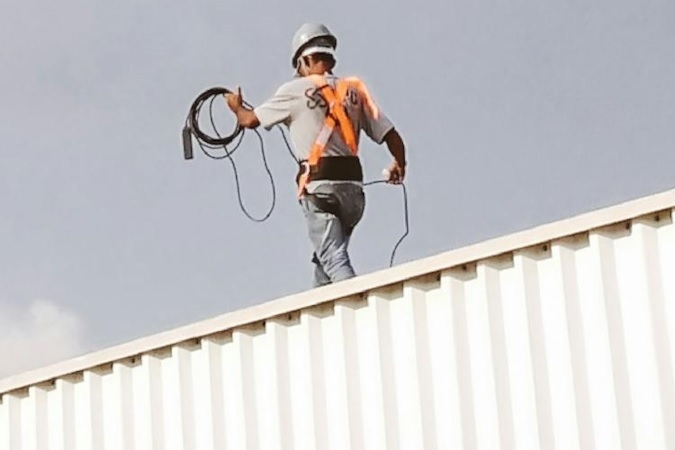
Working on a flat roof may seem less dangerous than working on a sloped roof, but flat roof work is still dangerous whenever there is a risk of falling from the edge or through fragile materials. To work safely on a flat roof you must plan the job thoroughly, choose suitable access equipment, use the right fall protection and follow the guidance set out by the HSE.
Here's what to do:
- Identify the hazards before stepping onto the roof
- Choose safe access equipment for reaching the roof
- Use the right fall protection for flat roof work
- Consider edge protection and collective safety measures
- Work within a safe system and maintain good housekeeping
- Choose equipment that suits the job
- Ensure workers are trained and competent
- Plan for emergencies and rescue
1. Identify the hazards before stepping onto the roof
A flat roof may appear low risk, but unprotected edges, cluttered surfaces and fragile areas can create serious dangers. Before any work starts, carry out a risk assessment to identify where falls could occur, how the roof surface behaves under load and whether adverse weather conditions could increase the risk. See the HSE's fragile roof guidance for more details.
2. Choose safe access equipment for reaching the roof
You must ensure workers can reach the flat roof safely. This could involve using a fixed access ladder, a mobile access tower or a MEWP depending on the job. Access equipment must be stable and correctly maintained. If you're working with a MEWP, it's important to use appropriate safety gear such as the G-Force MEWP harness kit or the IPAF Restraint Kit with MEWP Harness & Lanyard.
3. Use the right fall protection for flat roof work
Fall protection must match the risk. On many flat roof jobs, a restraint system is ideal because it prevents the worker from reaching the edge. Restraint lanyards are ideal for this purpose. Where there is a chance of going over the edge, a fall arrest system with a suitable harness and lanyard is required.
Depending on the job, you may also need anchor points or portable man anchors. Safety Harness Direct supply a wide range of anchoring products that comply with relevant EN standards, allowing you to build a reliable system suited to the specific roof structure.
4. Consider edge protection and collective safety measures
Collective protection measures (such as guardrails) should be used wherever possible because they protect everyone on the roof regardless of what equipment each person is using. The Health & Safety Executive's Work at Height guidelines prioritise collective protection over personal fall protection for this reason. If guardrails are not feasible, personal fall protection becomes essential.
5. Work within a safe system and maintain good housekeeping
A clear work area helps prevent slips and trips, which are common on flat roofs. Remove loose materials, avoid trailing cables where possible, and ensure workers move cautiously near edges. Weather conditions matter too: wet, icy or windy conditions can dramatically increase risk and may require the job to be postponed.
6. Choose equipment that suits the job
Many flat roof tasks involve short-duration work or inspection. For these quick jobs, a simple safety harness kit will usually suffice. For roof work that involves tools, tool lanyards prevent dropped objects from injuring people below.
If you're unsure which equipment is right for your task, visit Safety Harness Direct's dedicated Flat Roof Access department.
7. Ensure workers are trained and competent
No equipment can compensate for a lack of knowledge. Workers must understand how to inspect and use harnesses, lanyards and anchor systems. They should also be familiar with emergency procedures, including rescue planning in case a fall arrest system is deployed.
8. Plan for emergencies and rescue
A rescue plan is mandatory whenever fall arrest equipment is used. Suspension trauma can occur quickly, so a prompt, rehearsed rescue is essential. Specialist rescue kits are available to help with this.
Working safely on a flat roof demands thorough planning, the right equipment and a clear understanding of how to protect workers from falls. By following HSE guidance and using certified gear from Safety Harness Direct, you can significantly reduce risk and ensure every job is carried out safely.