harness training requirements

If you work at height, whether it be once a year or multiple times a month, you have a duty to partake or provide working at height harness training. This is a legal duty under The Health and Safety at Work Act of 1974. It is essential that anyone who works from height is 'competent' in doing so.

Read on to find out more about work at height training and why it's important for the health and safety of yourself and your peers when working at height!

More...

working at height guidance

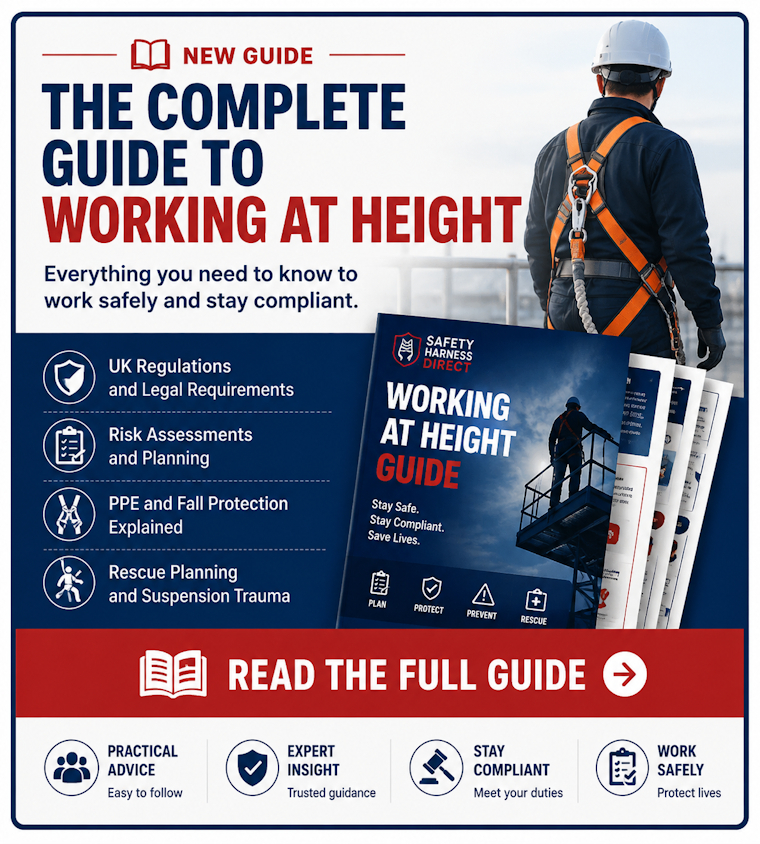
At Safety Harness Direct, we understand and care about your safety when working at height. If you work at height frequently, you will be well aware of the risks that come with this type of work. To give you the essential information you need to safely work at height, we have compiled all of our working at height guidance into one handy guide for your convenience. 

More...

Important Things to Remember When Using a Safety Harness

When using a safety harness, there are a few important things to remember. In this blog, we've put together things you should know about a safety harness to help you use one effectively and safely when working at height.

More...

types of harness

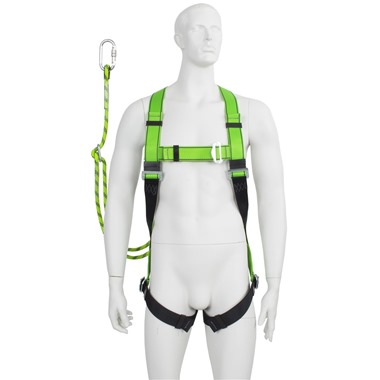
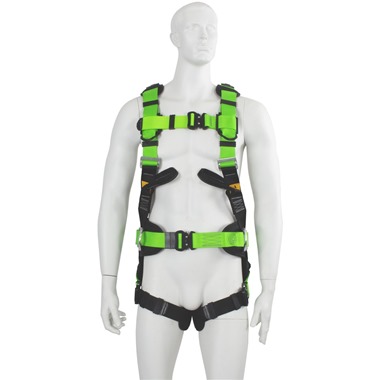
If you're new to the construction industry or curious about the different types of harnesses on the market, then you've come to the right place. Today we're going to look at the 3 main types of harnesses so you can get a better idea of the harnesses we offer. Once you know what different harness types are used for, you'll be able to select the one that's most appropriate for you. 

More...

scaffolding safety

Scaffolding safety is incredibly important. We've used our safety harness expertise to put together some scaffolding safety do's and don'ts to help keep you safe next time you're on site! 


Scaffolding Safety Do's

  • Always thoroughly check the scaffolding materials (including poles, platforms and connections) for signs of wear or damage before you start building - never use materials that you aren't 100% sure are safe.

  • Always thoroughly inspect your scaffolding harness for any damage or wear before use - the consequences of using damaged or faulty harnesses can be fatal, so make sure your harness inspection is in depth and that any harnesses deemed unfit are taken out of use.

  • Always clear the ground of any debris and ensure that it is completely level before you start constructing the tower. 

  • When constructing the tower, follow the manufacturer's instructions carefully. If you suspect that a part if missing or not built correctly, rectify this before you start work. 

  • Ensure that only trained and experienced workers are working on the scaffold towers. All workers should have a good understanding of security procedures.

  • Always carry out a risk assessment before starting the work.

  • Always maintain three points of contact when using fixed ladders or stairs for access. 


Scaffolding Safety Don'ts

  • Never erect a scaffold tower near a hazard like a power line - there must always be a suitable clearance before the work platforms and any external hazards.

  • Don't keep equipment that is not in use at the top of the tower as it could fall and injure workers below.

  • Don't work on scaffolding in adverse weather conditions like extreme wind, rain, snow or storms as these can cause the scaffold to become unstable.

  • Never attempt to work on scaffolding without the correct PPE - you will need a harness, helmet, gloves, hearing protection protective eyewear and hi-vis clothing.

  • Never load a scaffold beyond its weight capacity.

  • Never climb the steelwork or use cross braces as ladders.

  • Never throw, drop or tip materials from height. 

  • Don't work on platforms without appropriate guardrails and toe boards.


Here at Safety Harness Direct, we supply a wide range of height safety equipment that will enable you to work at height safely on scaffolding. If in doubt, always speak to the site manager before undertaking any work on scaffolding. 

Browse Scaffolding Safety Harnesses >